
This article forms part of a series of think pieces to be released by the Ateneo Bangsamoro Initiative of the School of Government, Ateneo de Manila University. The series is intended to contribute to the ongoing discourse on governance and development in the Bangsamoro region.
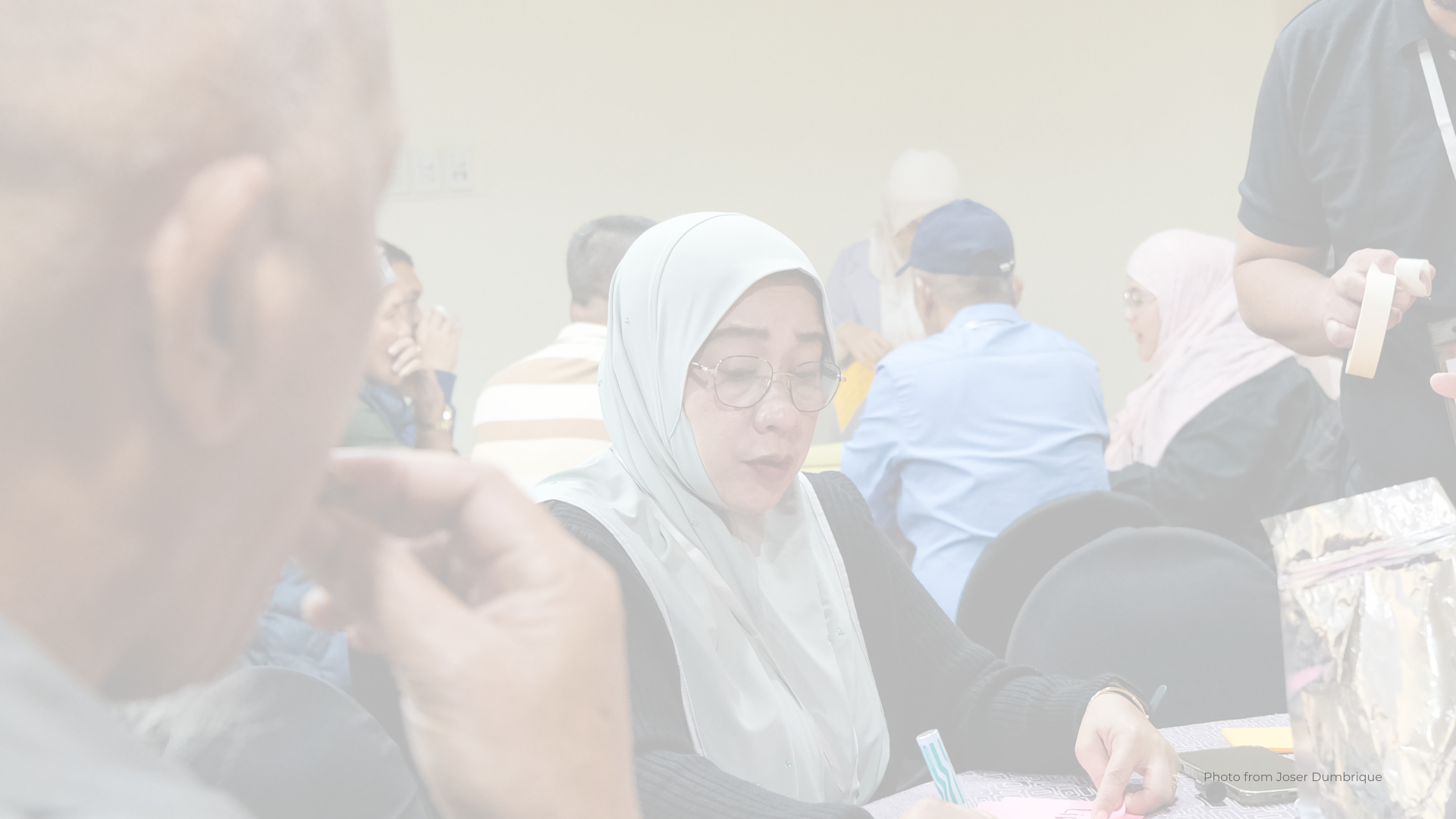
The 2nd Bangsamoro Mediators' Forum organized by the Centre for Humanitarian Dialogue (CHD) in November 2025 gathered over a hundred partners including 35 community mediators working in conflict-affected and vulnerable areas of Mindanao and Sulu. Since it started two years ago, the forum has served as an important venue for learning, problem-solving, networking, and enhancing collaboration to address community conflicts such as rido (clan feuds), and other related issues in the Bangsamoro Region. More importantly, the gathering has provided opportunities for interfaith and inter-generational dialogues to happen between seasoned mediators and a younger generation eager to carry the flame of peacebuilding and conflict resolution to a promising and exciting future.
During the three-day forum, I witnessed amazing energy from a convergence of efforts by various sectors committed to tackling the urgent problem of rido and other horizontal conflicts.[1] In engaging mediators and youth, I realized that the findings in the 2007 book, Rido: Clan Feuding and Conflict Management in Mindanao, remain relevant today as clan feuds continue to be a persistent threat to peace in Mindanao. First published by The Asia Foundation over 19 years ago, the book was based on an in-depth coordinated investigation of clan feuds locally known as rido.[2] Through the study, we gained a better understanding of the prevalence, nature, dynamics, and the causes and consequences of rido. We learned that land disputes and political rivalries were the major causes of rido which is still true today. We gained deeper insights into how a rido between rival clans interacted in adverse ways with the broader secessionist conflict by drawing the involvement of the Armed Forces of the Philippines, the Moro liberation fronts, local militias, and other armed groups with devastating consequences. Crucially, the study also revealed how rido can be mitigated and resolved through hybrid and pluralistic approaches.
Rido remains a persistent threat to communities today as clan feuds continue to kill and displace a lot of people especially in the Bangsamoro Autonomous Region in Muslim Mindanao (BARMM).[3] But a lot has changed in the way rido is handled over the years. I have observed at least five bright spots in current efforts to manage this type of conflict. First, there is now a more concerted effort to resolve rido by a growing range of actors. Civil society and communities are now working closely with local governments, religious and traditional leaders (i.e. sultans and elders), with support from state security forces, the Moro liberation fronts, BARMM institutions, and the participation of an increasingly assertive youth demanding a change in mindsets to prevent such conflicts. Organizations like CHD and their community mediator partners have been at the forefront of addressing rido in Mindanao and Sulu for years. With their growing network of partners in government, BARMM, peace offices, the international community, and youth networks like Kris for Peace, CHD has patiently nurtured mutual learning and catalyzed collaborative action to deal with rido, while building a community of practice in mediation.
Second, compared in the past, we now have better trained community mediators thanks to two decades of civil society capacity building. These mediators are usually community-based volunteers that utilize a range of conflict resolution techniques such as mediation and other customary and hybrid approaches in preventing and mitigating rido. This underscores the need for continuous training and practice, nurturing innovations, and financial support for community mediators. During the Bangsamoro Mediators’ Forum, no less than Supreme Court senior associate justice Marvic Leonen, encouraged the community volunteers to be undaunted in using local conflict resolution systems that work, as these practices and their treasure trove of experience can inform changes in Philippine laws, and help attain the Constitution’s core values of human dignity, human rights, social justice, and empowerment.
Third, there is now a better recognition of trauma as a factor behind rido's persistence. During the forum, trauma due to violence was a constant theme that came out during the intimate dialogues between the youth and their elders. Participants shared their traumatic experiences with rido and with the wars in Mindanao. Some also shared their inspiring stories of how they were able to transform these deep “unseen wounds” to overcome the cycle of violence. Unfortunately, trauma healing and other psychosocial interventions receive limited funding because of the perceived difficulty in measuring success of such interventions in conflict settings, and donors have tended to prioritize state-centric solutions to violence. The inter-generational impact of trauma points to the importance of supporting and designing more innovative psychosocial interventions for a more sustainable peace.
Fourth, new institutions from BARMM have emerged with a serious commitment to end rido, such as the Ministry of Public Order and Safety (MPOS) and the Peace, Security, and Reconciliation Office (PSRO). The recently established PSRO is a product of an executive order to manage feuds within Moro Islamic Liberation Front (MILF) areas during the crucial transition period.[4] Meanwhile, the MPOS has a broader mandate to pursue peace, unity, and reconciliation in BARMM.[5] The ministry has conducted numerous training on alternative dispute resolution approaches, and have provided the much-needed institutional support and coordination to rido resolution efforts. These efforts demonstrate the importance of helping BARMM succeed so that the regional government can develop more responsive institutions, laws, and mechanisms to prevent violence and improve governance.
Fifth, better data on rido and other forms of violence are now accessible to the public, providing improved analysis of conflicts. For instance, Climate and Conflict Action Asia (formerly International Alert) has been assiduously documenting conflicts that can lead to polarization and collective violence through their Critical Events Monitoring System. Another think-tank, the Armed Conflict Location and Event Data (ACLED) started documenting rido in 2018 and has provided their own interesting perspectives on the problem. BARMM's MPOS is also catching up, as they are in the process of improving their own database and digitizing information of rido cases. More collaboration is needed among these organizations and agencies to enhance methodologies and information sharing towards improved conflict monitoring and a better understanding of conflicts over contested land claims for policy considerations.
All of these efforts have been commendable in supporting the broader peace in Mindanao by preventing and managing conflicts that could affect the ongoing peace process. But ensuring the sustainability of these peace initiatives has always been a challenge. Civil society-led peace efforts are often ad hoc and the mediated settlements can be fragile. A more durable peace requires deeply institutionalized structures that address competing land claims, issues of land dispossession, historical injustices, and other grievances that can trigger violent conflict. But this is easier said than done. Centuries of colonization, and waves of state-sponsored migration under succeeding colonial and Philippine governments have created multiple land instruments with overlapping institutional and legal frameworks for land management and administration.[6]
Disentangling centuries of convoluted mess is a political process that will take decades. The first step is ensuring the legitimacy of the Bangsamoro government. This starts by working for clean and honest parliamentary elections in BARMM rescheduled this 2026. Once an elected parliament is in place, they will begin the long arduous task of initiating reforms and crafting laws, policies, and institutions that reflect the aspirations of the Bangsamoro people. The current transitional government already has some serious wins under their belt with the enactment of priority legislation such as the Bangsamoro Administrative Code, Bangsamoro Civil Service Code, Bangsamoro Education Code, Bangsamoro Local Governance Code, and the Bangsamoro Electoral Code.[7] Community mediators will continue to play an important role in deescalating and mitigating conflicts while the house is being built.
There are at least two challenges along the road. First, the national government and MILF are facing rough sailing in implementing the normalization aspects of the Comprehensive Agreement on the Bangsamoro (CAB), which is the landmark peace deal ending decades of secessionist conflict in Mindanao. Some concerns include delays in meeting the obligations for the socioeconomic development of MILF communities; the commensurate demobilization of combatants and their firearms; and delays in achieving transitional justice.[8] The sudden change in BARMM leadership was also a cause for concern. These issues point to the problem of sourcing funds, bureaucratic delays, and the emerging political entanglements with the brewing 2028 presidential race.
The second challenge is a looming storm. As an independent researcher, I have witnessed first hand how rido and other conflicts are interacting with climate emergencies and the effects of environmental degradation. Many communities in Mindanao are hard-hit by a combination of conflict and extreme weather events like catastrophic storms and floods, withering heat, and coastal storm surges that are destroying settlements and livelihoods.[9] One would be surprised to see vast farm fields submerged in flood waters, while locals deal with rido in some parts of Maguindanao for instance. Community mediators have also narrated accounts of families evacuating calamities only to find their lands occupied by other claimants upon their return.
In other areas, insurgencies and extreme weather events are being exacerbated by environmental degradation due to development aggression[10] and unregulated commercial activities related to mining, logging, plantations, and resorts, which are driving people to hunger, hazards, and culture loss.[11] There have been reported harassment and killings of community paralegals, and environmental and human rights defenders in such places.[12] This combination of conflict, climate change, and environmental destruction is a perfect storm that is keeping people poor, aggravating their precarious conditions, and driving grievances that could lead to more serious conflict in the future. This is a wicked problem that needs more attention and action.
Building trust is key to any successful peace and conflict resolution effort. Likewise, trust in the new Bangsamoro institution and continued confidence in the peace process is contingent on credible elections and keeping promises made in the peace agreement. An extraordinary amount of political will, patience, and discipline must be exercised to protect the gains of the peace process and insulate the historic first parliamentary elections from any political interference related to the upcoming 2028 presidential contest. Beyond the stormy seas, I see a bright and promising future for the Bangsamoro on the horizon.
[1] Lara and Schoofs (2013) classify armed violence into two broad categories: vertical violence such as state-rebel conflicts and horizontal violence which are non-rebellion armed conflicts occurring among warring groups such as families, clans, and tribes (p. 28-29).
[2] Rido or ridu is a Meranao term. Depending on the locality, clan feuds are known through various local terms such as pagbanta, mamauli, ukag, pagbaus, and borrowed terms like kontara, kontra, kontla.
[3] See Buenaventura 2025; International Crisis Group 2024, 2; Abasolo 2022, 103-104.
[4] Executive Order No. 0008, Series of 2022.
[5] Bangsamoro Autonomy Act No. 13 (March 2019, page 123).
[6] World Bank and IOM 2016.
[7] Reflecting on a Decade of Peace: A Look Back at the Comprehensive Agreement on the Bangsamoro.
[8] See International Crisis Group 2024, 3; and Iqbal 2024.
[9] See Climate Conflict Action 2024; and Sterneck and Bollentino 2024.
[10] “Development aggression” involves the imposition of development projects and policies without the free, prior, and informed consent of affected communities. (See Corpus 2005, 3).
[11] See Rappler, “Disaster in Kusiong landslides: How politics killed non-Moro IPs,” October 27, 2023; “Poor towns near nickel mines pay the price of energy transition - report,” November 4, 2025; and PCIJ, “Confusion about San Miguel’s Intensions in Idyllic Mariahangin,” July 23, 2025.
[12] During my interviews with civil society groups and public interest lawyers, it was revealed that two paralegals from communities in Davao Oriental were shot dead, while another one was critically injured in General Santos City in July 2025. This seems to be part of a broader pattern of harassment and killings of environmental and human rights defenders. Also see Patumbon 2025; and Espinosa 2025.
Wilfredo M. Torres III, Ph.D., is a Non-Resident Research Fellow at the Ateneo Policy Center of the Ateneo School of Government. The views expressed herein are those of the authors and do not necessarily reflect the views of Ateneo de Manila University.