
This article forms part of a series of think pieces to be released by the Ateneo Bangsamoro Initiative of the School of Government, Ateneo de Manila University. The series is intended to contribute to the ongoing discourse on governance and development in the Bangsamoro region.
The creation of the Bangsamoro Autonomous Region in Muslim Mindanao (BARMM) through Republic Act No. 11054, or the Bangsamoro Organic Law (BOL), represents one of the most ambitious experiments in autonomy in Southeast Asia. It is an experiment that seeks to consolidate genuine self-rule for the Bangsamoro people while ensuring that the region remains an integral part of the Philippine state. Central to this arrangement is the recognition that autonomy does not exist in isolation. To thrive, it requires formal structures that mediate between regional self-governance and the overarching authority of the national government. The BOL addresses this need by establishing intergovernmental relations (IGR) mechanisms—offices designed to manage the delicate balance of authority and institutionalize cooperation between two levels of government.
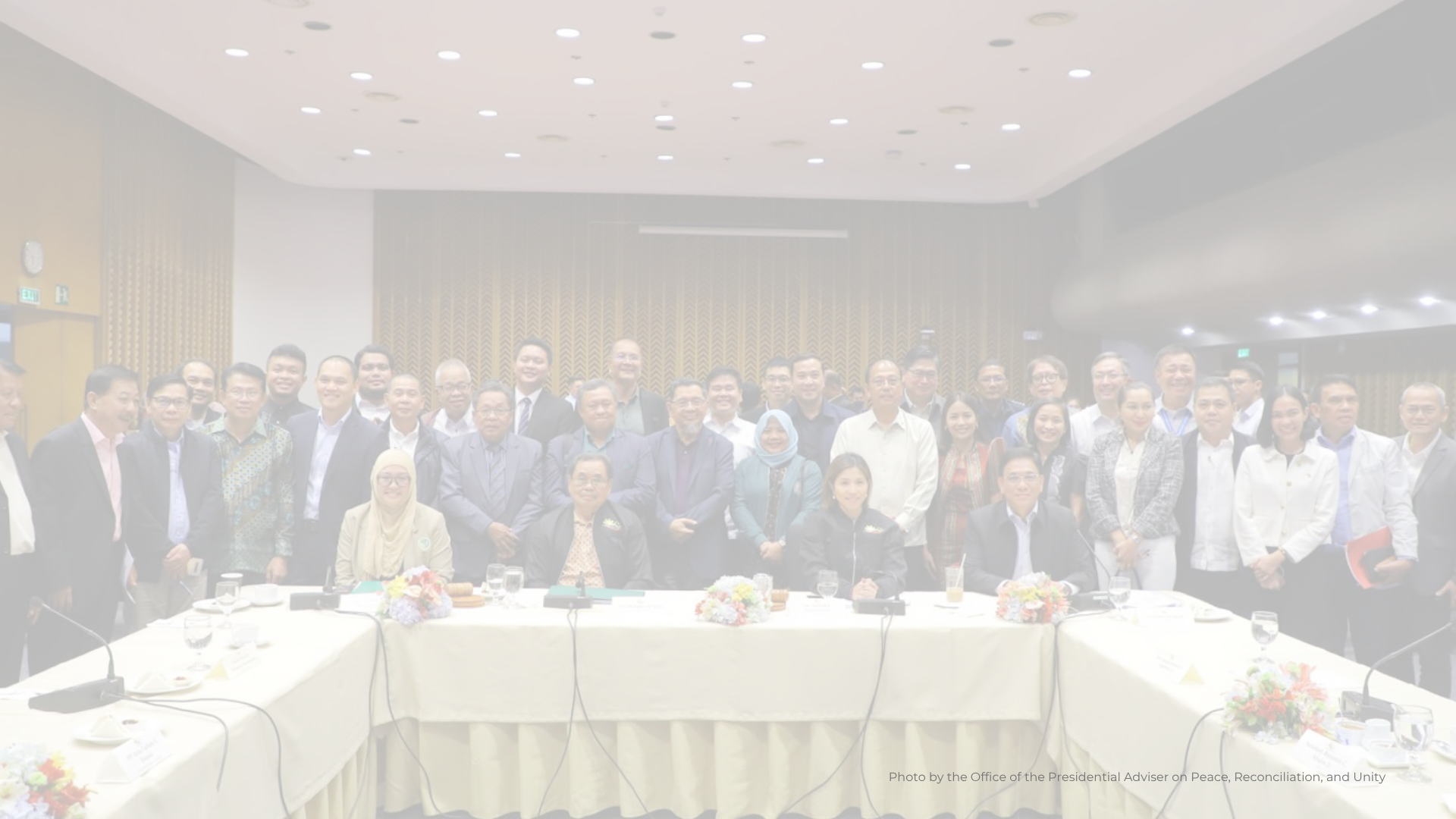
The IGR mechanisms are now functioning: the Intergovernmental Relations Body (IGRB), the Philippine Congress–Bangsamoro Parliament Forum (PCBPF), the Intergovernmental Fiscal Policy Board (IFPB), the Joint Body for the Zones of Joint Cooperation (JBZJC), the Intergovernmental Infrastructure Development Board (IIDB), the Intergovernmental Energy Board (IEB), the Bangsamoro Sustainable Development Board (BSDB), and the Council of Leaders (COL). As the respective titles suggest, each of these bodies attends to a distinct dimension of governance. Together, they provide the framework where the national and regional governments can manage overlapping mandates and promote mutually beneficial policies.
Ostensibly, the success of these bodies cannot be measured by their formal existence alone. The ultimate test lies in their ability to deliver timely, fair, and concrete outcomes. Without tangible results, their legitimacy will be challenged. Yet, while both the Bangsamoro Transition Authority (BTA) and Malacañang have expressed optimism on these mechanisms, critical gaps remain, and these gaps threaten not only the ability of the regional and central governments to work in harmony, but also the credibility of the BOL as a framework for lasting autonomy.
One of the most pressing gaps is the absence of permanent secretariats for each IGR office. A secretariat is more than an administrative convenience; it is the institutional backbone that ensures continuity, coherence, and professionalism. Without it, coordination becomes dependent on personalities rather than processes. A well-staffed and tenured secretariat for each of the mechanisms could ensure that decision-making processes are consistently aligned with the BOL’s strategic goals, regardless of political changes or leadership turnover. It would also help cultivate a professional and cordial working relationship between national and regional bureaucrats, reducing the risk of miscommunication or conflict escalation.
A permanent secretariat could also address ambiguities in authority and mandate. The BOL lays out broad principles but leaves many technical details unsettled. For example, revenue sharing from natural resources remains contentious. The default tendency is to defer to the decisions of the national government, undermining the spirit of autonomy. Having a permanent technical staff can help facilitate better decision-making processes since there exists a repository of institutional memory.
A permanent secretariat also reduces the danger of tokenism. There is always a risk that IGR bodies will be perceived as mere symbolic gestures—ritualized meetings with little impact on policy outcomes. If this perception hardens, stakeholders may abandon the mechanisms altogether, preferring informal lobbying or unilateral action. This would erode trust and undermine the spirit of partnership embedded in the BOL. By contrast, a functioning secretariat provides visible proof that the mechanisms are relevant, accessible, and capable of producing results. It transforms IGR from symbolic theater into a genuine engine of cooperation.
At present, however, IGR in BARMM is still in its infancy. Stakeholders still treat the bodies as ad hoc arrangements, more political than administrative in character. This reflects the broader reality of the transition period, in which many governance structures remain provisional. Yet for IGR to mature into a durable system, it must be institutionalized as efficient and effective coordination mechanisms rather than as a tool for political convenience. Needless to say, achieving this goal requires consistent effort from both government and civil society.
Establishing an IGR culture is particularly crucial. Cooperation cannot be assumed; it must be cultivated through repeated partnerships, shared problem-solving processes, and mutual respect. Bureaucrats from both the national government agencies (NGA) and BARMM need to internalize the IGR way, developing not only technical skills but also the mindset required for collaborative governance. Training, knowledge exchange, and the consistent practice of coordination can help imbue this ethos. Here again, secretariat support is vital. A secretariat can preserve institutional memory, maintain a steady workflow, and ensure that IGR outcomes are not undermined by the shuffle of political turnover.
Public engagement is also necessary. The success of IGR cannot be left solely to politicians and bureaucrats. It is equally important that civil society groups, academics, youth organizations, and local leaders deepen their understanding of the IGR mechanisms. Greater awareness fosters accountability, ensuring that these bodies are not captured by elite interests, and rather, serve the collective interests of the Bangsamoro people. Stakeholder engagements can help IGRs evolve into robust tools for peace and development.
In the final analysis, the IGR mechanisms in BARMM are both fragile and promising. Their fragility lies in their incomplete institutionalization and the risk of political elite capture. On the other hand, their promise lies in the potential to transform historical animosity into a sustainable culture of cooperation. The challenge ahead is to ensure that the promise outweighs the fragility. This requires investment in permanent secretariats, cultivation of bureaucratic skills, and mobilization of public support. Above all, it requires the recognition that autonomy is not a destination but a never-ending process—one that must be nurtured through institutions capable of bridging divides while affirming the right to self-rule.
Atty. Michael Henry Yusingco, LLM is a Senior Research Fellow of the Ateneo Policy Center of the Ateneo School of Government. The views expressed herein are those of the authors and do not necessarily reflect the views of Ateneo de Manila University.