
This article forms part of a series of think pieces to be released by the Ateneo Bangsamoro Initiative of the School of Government, Ateneo de Manila University. The series is intended to contribute to the ongoing discourse on governance and development in the Bangsamoro region.
The passage of the Bangsamoro Electoral Code (BEC) marks a historic milestone in the ongoing political transition in the Bangsamoro Autonomous Region in Muslim Mindanao (BARMM), as well as a significant step toward peace and stability in the region. More importantly, it offers a clear glimpse into the democracy the region is shaping.
The BEC and its accompanying IRR serve as the legal framework for the new electoral system in BARMM. They provide the legal and operational foundation necessary for the conduct of the first parliamentary elections in BARMM. BARMM residents will now have the opportunity to vote for their representatives to the Bangsamoro Parliament—the 80-member governing body tasked with enacting laws and implementing projects for the region's general welfare. Fifty percent, or 40 of the 80 Parliament members, will come from Regional Parliamentary Political Parties (RPPPs).
Occupying half of the available parliamentary seats, RPPPs will play a crucial role in shaping the composition of the Bangsamoro Parliament and determining its priorities and advocacy.
Political parties today, unfortunately, carry a bad reputation—one rooted in troubling realities. From organizations that are supposed to advocate for social issues, ideologies, and party platforms, political parties in the Philippines have been associated with patronage politics, turncoatism, and political dynasties.
In passing the BEC and its IRR, the Bangsamoro Transition Authority (BTA) believes that BARMM has the opportunity to redefine what ‘genuine’ political parties are—and how they should operate.
The promise of the BEC in building ‘genuine’ political parties
Regional Parliamentary Political Parties are defined in the BEC as 'organizations formed by a group of citizens in the Bangsamoro based on the same ideology and common aspirations.' These organizations 'aim to have members elected to the Parliament and the local constituent units so that they can affect the way autonomy is meaningfully exercised in the governance of the Bangsamoro.
The BEC aims to ensure that the electoral system in BARMM will not suffer the same problems as the current system of elections, including the issues with political parties. It has set guidelines and requirements to address concerns on organizational legitimacy, party switching, and women representation, among others. Two new electoral institutions were established - the Bangsamoro Electoral Office (BEO) and the Bangsamoro Registration and Accreditation Committee (BRAC) - to oversee the registration and accreditation of RPPPs.
These guidelines and requirements, however, have received mixed reactions from different stakeholders. While others welcomed it as a positive development, others expressed their concerns over the legality of the new electoral code. Petitions from public officials and voters from BARMM were filed to the Supreme Court to nullify specific provisions of the BEC for being a ‘violation of the constitution and national laws.’ One of the petitions filed questioned the stringent requirements for RPPPs, particularly the minimum membership of 10,000 and the mandate to establish chapters in all provinces, cities, and most municipalities in BARMM. It argued that such requirements are restrictive and will only frustrate, rather than support, the formation of political parties in the region. As of this writing, the Supreme Court has yet to issue its ruling on the matter.
The promise of the BEC is now put to the test with the preparations for the upcoming BARMM Parliamentary Elections. The registration and accreditation of RPPPs served as the first real litmus test of the new system—offering a glimpse of how it works once actual political players on the ground are involved.
Assessing the registration and accreditation of RPPPs
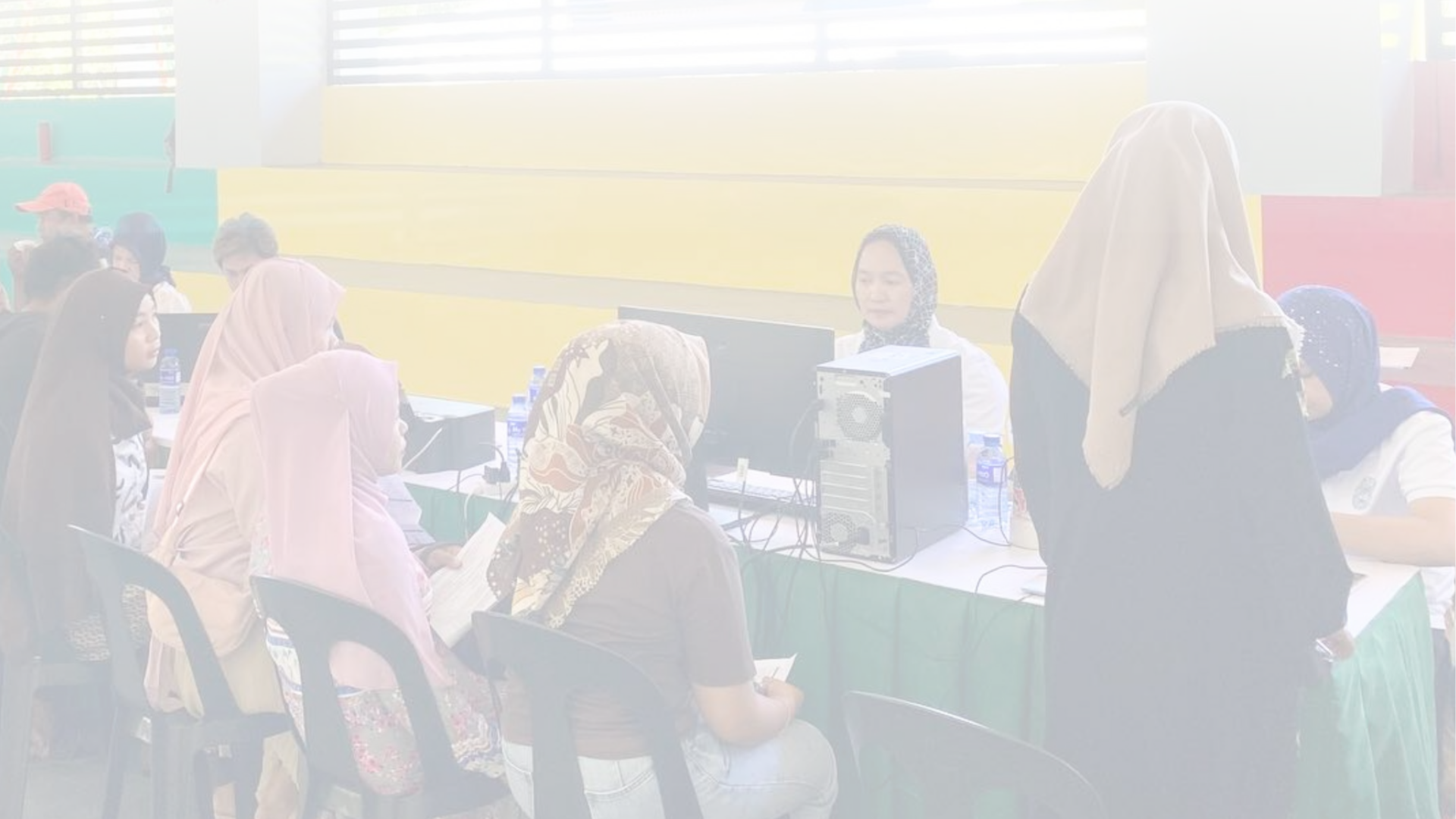
COMELEC scheduled a three-week period to file a Petition for Registration or Accreditation of RPPPs and PSOs from May 15, 2024 to June 7, 2024. This was later extended to July 1, 2024, following requests from local groups and political parties for an extension of the filing period. As required by the BEC, all political parties, including those previously registered and accredited by the COMELEC before the BEC's effective date, must register with the COMELEC through the BRAC if they intend to participate in the Parliamentary Elections. By the end of the filing period, the BRAC had received 16 petitions for the registration and accreditation of RPPPs. Petitioners were required to follow the procedures outlined in Article III, Rule III of the BEC IRR for the registration and accreditation of RPPPs in BARMM.
An initial assessment of the process was conducted through a qualitative research study that identified and analyzed different factors affecting the BRAC and local political parties in the registration and accreditation process. The following are the findings:
- Delayed release of the BEC and its IRR led to lack of preparations.
Although the BEC was passed on March 8, 2023, its accompanying IRR was released only over a year later on April 17, 2025. Without the IRR, the COMELEC and the BEO could not fully move forward with preparations for the BARMM parliamentary elections, which at the time were scheduled alongside the May 2025 national polls. COMELEC also had to integrate the BARMM election activities into the broader national and local election calendar, further tightening the timeline.
The filing period for Regional Parliamentary Political Parties (RPPPs) began on May 15, 2024, less than a month after the IRR’s release and only five months before the filing of certificates of candidacy in October of the same year. This left both the Bangsamoro Registration and Accreditation Committee (BRAC) and local political parties with little time to conduct information drives or prepare its staff and stakeholders, forcing it to work with limited resources while managing expanded responsibilities. Local parties, meanwhile, struggled to review the IRR, coordinate with chapters, and capacitate members. Some petitioners even flagged poor coordination with BRAC, raising concerns of possible misunderstandings or conflict.
Given the novelty of this new provision and the central role of RPPPs in the Bangsamoro parliament, more time should be given to the BRAC and local political parties to prepare for the registration and accreditation process. The BEO may also explore partnering with CSOs and the academe in conducting information drives and capacity-building initiatives for its staff and external stakeholders. - The BEO lacks the appropriate budget to perform its additional functions.
The BEO and the BRAC lack the financial resources it need to prepare and effectively supervise the upcoming BARMM Parliamentary Elections. There are glaring gaps in the operations that need to be addressed.
The BRAC officials highlighted two things that should be prioritized - a) hire more personnel as some of the existing BRAC members are performing multiple tasks; and b) acquire bigger office space to address their challenges in recording, processing, and archiving requirements from the petitioners. It is important to note that the BEO is tasked to supervise BARMM parliamentary elections; it is also tasked to supervise the synchronized national elections. Given that the BARMM election is a new process, it has to be given the appropriate budget necessary to carry out the task.
It is therefore crucial for COMELEC to review the budget of the BEO to ensure that resources are available to effectively perform its core functions. Additionally, BEO can request from the Bangsamoro Parliament supplemental funds, with clear guidelines and parameters. - Emerging local political parties are at a disproportionate disadvantage.
Stringent requirements remain a pressing concern for the newly established small political parties in the Bangsamoro region. The membership threshold of at least 10,000 is one of the most challenging prerequisites for accreditation. Moreover, the required party chapters in all provinces, cities, and the majority of municipalities in the region is also viewed as significant barrier in a process that is supposed to promote democratic participation.
These requirements, however, are not issues to more established and larger political parties. The existing structure and large membership base of large political parties helped them adapt to the provisions of the BEC and prepare for the upcoming elections. Their current resources also enabled them to recalibrate their recruitment strategies and further organize their existing pool of party members.
The Bangsamoro Parliament and the BEO must therefore consider reviewing membership and other organizational requirements and introduce adjustments. - Logistical challenges persist for both emerging local political parties and the BEO.
Complying with requirements set forth by the BEC are recurring concerns for party representatives. The financial burden of putting up campaign materials in over 100 municipalities, for instance, poses a significant challenge for parties that are only now being established. Aside from the requisite documentary fees, the frequent travel and multiple assemblies required to introduce a party and gain support are just a few examples of the growing pains faced by new political parties.
BARMM’s geographic profile is challenging to navigate as it has jurisdiction over both landlocked areas and island groups. Some areas are remote and travel is difficult. As a result, the same areas seldom have access to a stable supply of electricity, a reliable phone signal, and an internet connection. This is a problem experienced not only by political parties, but also by the BEO itself. Verification processes, such as in-person visits to chapter headquarters, have been hindered due to the election officers were unable to locate them.
One intervention proposed is the establishment of a Political Party Development Fund. Funded by the Bangsamoro Parliament with proper guidelines in place, this fund aims to provide financial support to emerging political parties that lack the necessary resources to sustain their operations. This assistance could help small, less established political parties address difficulties in complying with documentary requirements and in organizing mandatory activities.
Conclusion
The BEC promises a new electoral system that encourages the formation of genuinely principled political parties - contingent on the success of the registration and accreditation process. Given the outcome of the first run, along with the impact of other issues such as Sulu's exclusion from BARMM and leadership changes in the BTA, the promise could be at a breaking point.
However, given that this is BARMM’s first parliamentary elections, there is an opportunity to address gaps and challenges in implementing the new electoral code. The BEC should evolve into a unit that truly understands the contextual realities of its people. An open dialogue among election stakeholders must continue to discuss further political party development reforms in the region.
This article was based on the Governance Innovation Report of Nizam M. Pabil for his Masters of Public Management degree at the Ateneo School of Government. The views expressed herein are those of the authors and do not necessarily reflect the views of Ateneo de Manila University.